
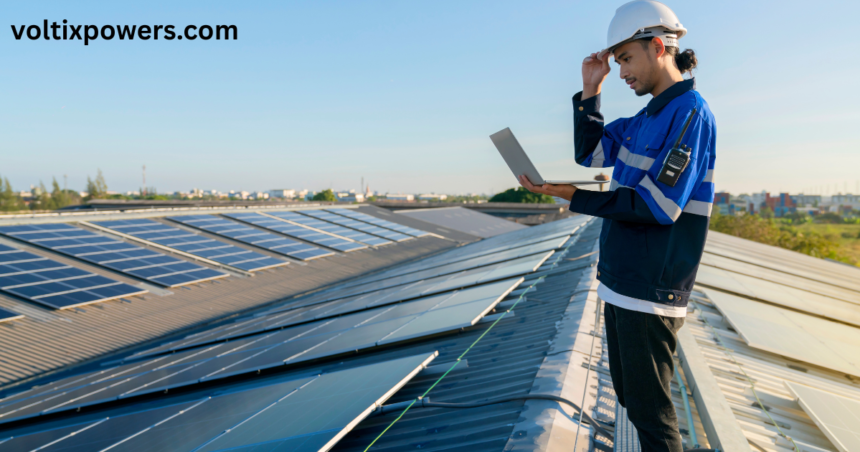
Flat roof solar panels are often overlooked in favour of sloped, south-facing installations, but they can be just as effective a home for solar energy — sometimes even more so. As of July 2026, roof solar installations have become increasingly popular across both residential and commercial properties in the UK, thanks to easier access for installers, flexible panel orientation, and falling equipment costs.Interest in roof solar has grown steadily as more homeowners and businesses look to make use of otherwise wasted roof space. Whether you’re a homeowner looking to cut your energy bills or a business exploring commercial solar, this guide covers everything you need to know: planning permission, mounting options, costs, payback periods, and how to choose the right installer.
Do You Need Planning Permission for a Flat Roof System?
As of 2026, most flat roof installations still fall under “permitted development,” meaning you won’t need to apply for planning permission in most cases. However, there are conditions to be aware of:
- Your property is a listed building
- Your property is in a conservation area
- You live in a flat (rather than a house)
- The panels would sit more than 60cm above the highest part of the roof (excluding chimneys)
- There isn’t enough space for the required 0.5–1m border between the panel system and the roof edge
For commercial properties, the rules are slightly different: non-domestic flat roof systems are generally exempt from planning permission provided they sit at least 1m from the building’s edges, protrude no more than 1m above the roof surface, and don’t become the highest point of the building (excluding the chimney). If any of these conditions aren’t met, you’ll need to apply for planning permission before installation.
Payback Period and Return on Investment
For residential flat roof systems, the average 3-bedroom household can expect to break even in around 10.4 years, with savings of roughly £938 a year when combined with a battery and Smart Export Guarantee (SEG) tariff. Smaller systems take slightly longer to pay back (up to 13.7 years for a 1-bedroom property), while larger systems tend to break even faster.
For commercial systems, simple payback typically falls between 7 and 9 years — notably faster than residential, largely due to higher daytime energy consumption and larger system sizes. Given that most solar systems have a functional lifespan of 25 years or more, this leaves well over a decade of essentially free electricity generation after the initial investment is recovered.
Choosing the Right Mounting Angle
It’s a common misconception that flat roof panels should be tilted at the same 30–40 degree angle recommended for sloped roofs facing south. In practice, a shallower tilt — typically around 10 degrees — is usually the better choice for three reasons:
- Wind loading: Steeper angles catch more wind, requiring heavier ballast and stronger frames, which increases both cost and structural load.
- Row spacing: Steeper panels need more space between rows to avoid shading, reducing how many panels fit on the roof.
- Output per square metre: Data from London-based installations shows that panels mounted at 10 degrees produce between 52% and 72% more energy per square metre than those mounted at 30 degrees, once row spacing is accounted for.
A 10-degree mounting angle is generally considered the best balance between performance, ballast requirements, space efficiency, and installation cost.
East/West vs South-Facing Panel Orientation
If your roof doesn’t face directly south, you don’t need to worry — flat roof solar systems offer more orientation flexibility than sloped roofs.
East/west systems place panels back-to-back, tilted in opposite directions, with minimal gaps between rows. This configuration can generate up to 25% more output per square metre than a south-facing system, because significantly more panels can be fitted onto the same roof space, even though each individual panel is slightly less efficient. East/west systems also require less ballast, reducing structural load on the roof.
South-facing systems produce more energy per panel but require wider row spacing to prevent shading, meaning fewer panels fit overall. For most flat roofs, aligning panels with the building’s footprint — rather than forcing a true south orientation — usually delivers more total panels and a better overall output, even if the orientation is off-south by 20 degrees or more.
Ballasting, Roof Structure and Warranty Considerations
Most flat roof solar systems use a free-standing, ballasted mounting frame rather than penetrating the roof surface. This approach protects against leaks and helps preserve existing roof warranties — an important consideration if your roof is relatively new.
That said, ballasting isn’t always suitable. Very tall buildings or roofs with limited load-bearing capacity may not be able to support the required ballast weight, in which case fixings directly into the roof structure may be necessary. This typically requires sign-off from the roofing manufacturer to maintain watertightness and warranty compliance. Roofs using certain membrane types (such as Bauder systems) often require specialist fixings.
It’s also worth checking the condition of the roof itself before installation. Standard felt roofing can degrade over 10 years due to UV exposure and temperature swings, so upgrading to a maintenance-free membrane (typically guaranteed for 15–20 years and lasting up to 30) before installation can save costly disruption later.
How to Choose the Right Installer
Not all installers are equal, and choosing the right one has a significant impact on both cost and long-term performance. When comparing installers, look for:
- Accreditation: At minimum, the installer should hold Microgeneration Certification Scheme (MCS) certification.
- Multiple quotes: Getting quotes from several installers helps you benchmark pricing and spot outliers.
- Reputation: Check independent review platforms such as Trustpilot for genuine customer feedback.
- Labour warranty: A longer labour warranty offers greater protection if issues arise after installation.
- In-house design capability: Installers with their own design teams can tailor panel type, mounting angle, and layout specifically to your roof and energy usage, rather than applying a one-size-fits-all approach.
Conclusion
Flat roofs are far from a limitation when it comes to solar energy — in many cases, they offer more design flexibility, easier installation, and comparable (or better) returns than sloped roofs, provided the system is properly planned around mounting angle, orientation, ballasting, and roof condition. Whether you’re a homeowner aiming to cut energy bills or a business looking to reduce operating costs, the key to a successful flat roof solar installation lies in working with an experienced, accredited installer who can assess your specific roof and tailor the system accordingly. With payback periods typically between 7 and 11 years against a 25+ year system lifespan, this remains one of the most reliable long-term investments in reducing energy costs and carbon footprint.
FAQs
Can solar panels really be installed on a flat roof?
Yes, flat roofs can support solar panels and are often easier to install on than sloped roofs.
Do I need planning permission for roof solar panels?
Most installations fall under permitted development, though exceptions apply for listed buildings and certain height limits.
What is the best angle for roof solar panels?
A shallow tilt of around 10 degrees usually offers the best balance of output, cost, and structural load.
Is east/west or south-facing orientation better for flat roofs?
East/west systems often produce more total output per square metre due to fitting more panels overall.
How much do roof solar panels cost?
Residential systems typically range from £5,150 to £14,200 depending on property size and system capacity.
How long does it take to break even on roof solar panels?
Most residential systems break even in 10 to 14 years, while commercial systems typically pay back in 7 to 9 years.
Will solar panels damage my roof or void its warranty?
Ballasted, free-standing systems typically preserve roof warranties, but roof condition should be checked first.
What accreditation should a roof solar installer have?
Look for Microgeneration Certification Scheme (MCS) accreditation as a minimum standard.