
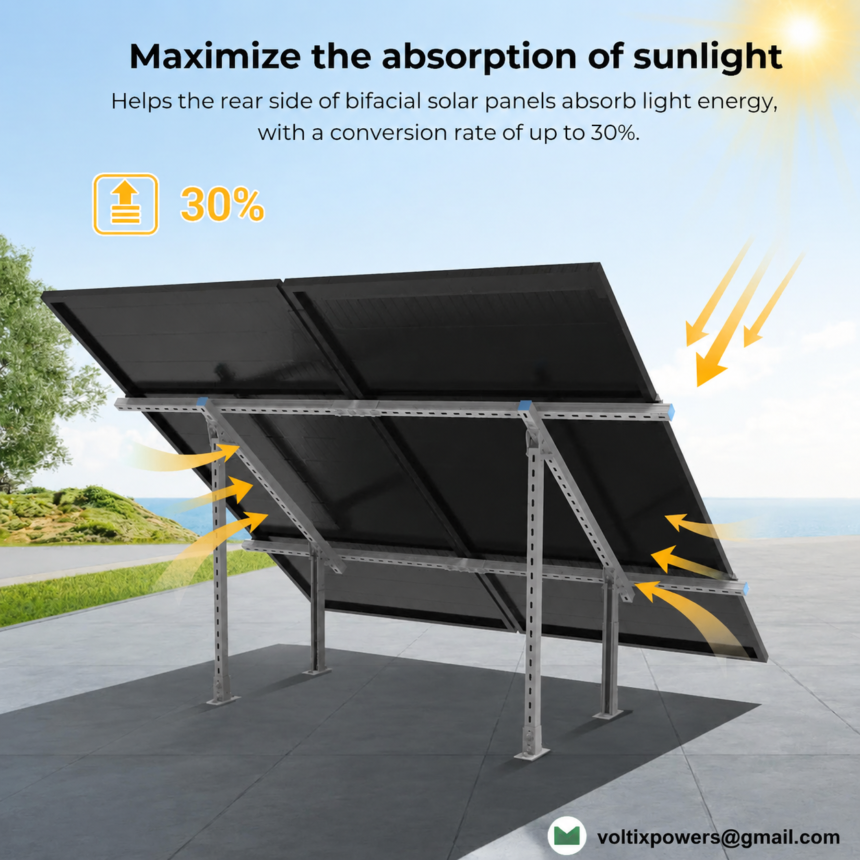
Ground mount solar panels are solar energy systems installed directly on the ground rather than on rooftops. They are supported by metal frames and positioned to receive maximum sunlight throughout the day. These systems are becoming increasingly popular among homeowners and businesses with available land.
Why Homeowners Choose Ground-Mounted Systems
One of the main reasons people select ground mount solar panels is their flexibility in placement. Unlike rooftop systems, they can be installed in the sunniest area of a property, helping improve energy production and overall efficiency. This advantage often results in higher electricity generation.
Better Sun Exposure and Performance
Ground-mounted systems can be adjusted to achieve the ideal tilt and orientation for sunlight capture. Because they are not limited by roof angles or shading issues, they often perform better than many rooftop installations. Proper positioning can significantly increase annual energy output.
Easier Maintenance and Cleaning
Maintenance is much simpler with ground-mounted solar arrays because they are easier to access. Homeowners can inspect, clean, and monitor the panels without climbing onto a roof. This convenience helps maintain system efficiency and extends the lifespan of solar equipment.
Flexible Design Options
Many property owners prefer ground mount solar panels because they allow for a variety of installation designs. Systems can be expanded over time if energy needs increase. This flexibility makes them suitable for residential, agricultural, and commercial applications.
Ideal for Large Properties
Properties with open land are excellent candidates for solar installations on the ground. Large yards, farms, and rural areas provide enough space to install larger arrays that generate substantial amounts of electricity. This setup can significantly reduce dependence on utility companies.
Tracking Technology Advantages
Some ground mount solar panels can be installed with solar tracking systems. These trackers follow the movement of the sun throughout the day, allowing panels to capture more sunlight. As a result, energy production may increase compared to fixed-position systems.
Installation Considerations
Before installation, property owners should evaluate land conditions, soil quality, shading, and local regulations. Professional assessment ensures the system is designed correctly and complies with safety requirements. Proper planning helps maximize long-term performance and return on investment.
Cost and Long-Term Savings
Although installation costs may be higher than rooftop systems, ground-mounted arrays often deliver excellent long-term value. Their improved efficiency, accessibility, and expansion potential can provide significant energy savings over the years. Many users find the additional investment worthwhile.
Conclusion
Ground mount solar panels offer an effective and flexible solution for generating clean, renewable energy. Their ability to achieve optimal sunlight exposure, support larger system sizes, and simplify maintenance makes them an attractive choice for many property owners. Whether for residential, agricultural, or commercial use, these systems can provide reliable electricity and substantial long-term savings while contributing to a more sustainable future.
FAQs
1. What are ground mount solar panels?
Ground mount solar panels are solar systems installed on the ground using metal support structures instead of being mounted on a roof.
2. Are ground-mounted solar panels more efficient?
They can be more efficient because they can be positioned at the ideal angle and location for maximum sunlight exposure.
3. Do ground-mounted systems require more space?
Yes. These systems need sufficient open land to accommodate the solar array and support structures.
4. Are they easier to maintain than rooftop panels?
Yes. Ground-mounted systems are easier to access, making cleaning and maintenance more convenient.
5. Can ground-mounted solar panels use trackers?
Yes. Many systems can be equipped with solar trackers that follow the sun to increase energy production.
6. How long do ground-mounted solar systems last?
Most quality solar systems can last 25 to 30 years or longer with proper maintenance.
7. Are permits required for installation?
In most areas, permits and inspections are required before installation. Local regulations may vary.