
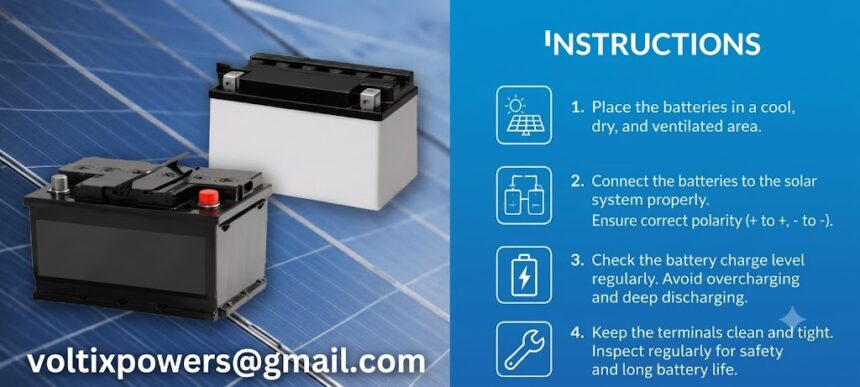
Solar panel batteries are the most important part of any solar system. Solar panels make electricity only when the sun is shining. But your home needs power at night too. Batteries store extra solar energy during the day and give it back to your home after sunset. Without batteries, you still depend on the grid or generator. If you install a solar panel on a metal roof, adding batteries makes it a true 24-hour system.
Solar Battery Terminal
The solar battery terminal is the connection point where cables attach to your battery. Always connect the positive terminal with a red cable and the negative terminal with a black cable. If you reverse the terminals on your solar batteries, the inverter can get damaged instantly. Before touching any terminal, make sure your hands are dry and use insulated tools to avoid sparks. Check the battery terminals every 6 months for corrosion. If you see white powder, clean it with baking soda and water, then apply petroleum jelly to prevent future corrosion. Loose terminals create resistance and can cause fire, so tighten all screws properly. Even in a solar panel on a metal roof system, battery terminal safety rules remain the same for maximum performance and safety.
Types of Solar Panel Batteries You Must Know
There are 2 main types of solar panel batteries in 2026. First is Lead Acid battery. It is cheap but heavy and lasts only 3-4 years. Second is the Lithium LiFePO4 battery. It costs more but lasts 10-15 years with zero maintenance. UK homeowners now prefer Lithium because it is safe, light, and gives more backup. For solar panels on metal roof installation, Lithium batteries are best because the roof structure can handle less weight.
How to Calculate Battery Size for Your Home
Choosing the right battery size saves money and gives full backup. Check your night load first. If your AC, fridge, lights, and TV use 2kW, then you need at least 10kWh solar panel batteries for 5 hours backup. Rule is simple: Battery kWh = Night load kW x Backup hours. Oversizing wastes money, undersizing gives no backup. A 5kW solar system with 10kWh battery is the most common combo in UK homes today.
Installation and Safety Tips
The battery room must be cool, dry, and well-ventilated. Heat above 30°C reduces battery life by 50%. Never install solar panel batteries in direct sunlight or closed small rooms. Keep 50cm of space around the battery for airflow. Lithium batteries have built-in BMS that prevents overcharge and short circuit. For metal roof homes, a ground floor or garage is the best place. Always hire an MCS certified installer in the UK to keep the warranty valid.
Common Mistakes to Avoid
People make big mistakes with solar panel batteries. Buying too small a battery to save money. Mixing old and new batteries together. No annual checkup. Also never discharge Lithium battery below 20%. Good BMS will stop it automatically. If you already have a solar panel on a metal roof, do not delay battery installation. Without a battery you lose 60% solar benefit at night.
Conclusion
The final truth is simple: solar panel batteries complete your solar system. Daytime solar + night battery = zero electricity bill. One-time investment in a good Lithium battery gives 10-15 years peace. If you are planning a solar panel on a metal roof in the UK, add a battery in the same package. It is the only way to become fully energy independent in 2026.
FAQS
1. How do solar panel batteries store excess energy during the day, andcan they completely power a household at night or during a blackout?
Solar batteries store the extra electricity generated by your panels when the sun is shining. At night or during power outages, your system automatically switches to this stored energy to keep your appliances running.
2. What is the average lifespan of a modern solar battery bank, andhow many years of warranty do manufacturers typically offer on them?
Lithium-ion solar batteries usually last between 10 to 15 years. Most reputable manufacturers provide a warranty ranging from 5 to 10 years, depending on usage cycles.
3. Is it possible to install a solar energy system without any batteries,and what are the main advantages of choosing a grid-tied setup instead?
Yes, you can install a grid-tied system without batteries, which is cheaper upfront. The main advantage is that you can use net metering to send excess power back to the grid for utility credits.
4. What are the key differences between lithium-ion and lead-acid batteries,and which option offers better long-term value for residential solar setups?
Lithium-ion batteries are more efficient, last longer, and require zero maintenance compared to lead-acid ones. Even though they cost more initially, they offer much better long-term value.
5. How do I calculate the exact battery capacity needed for my home,and what factors like daily energy usage should I take into account?
You need to look at your daily kilowatt-hour (kWh) consumption during non-solar hours and decide how many days of backup you want. A professional installer can calculate this based on your utility bills.
6. Do solar panel batteries require regular maintenance or physical checks,and what safety measures should be taken to prevent them from overheating?
Lithium-ion batteries require no regular maintenance, while lead-acid ones need periodic water top-ups. To prevent overheating, they should always be installed in a cool, well-ventilated space.