
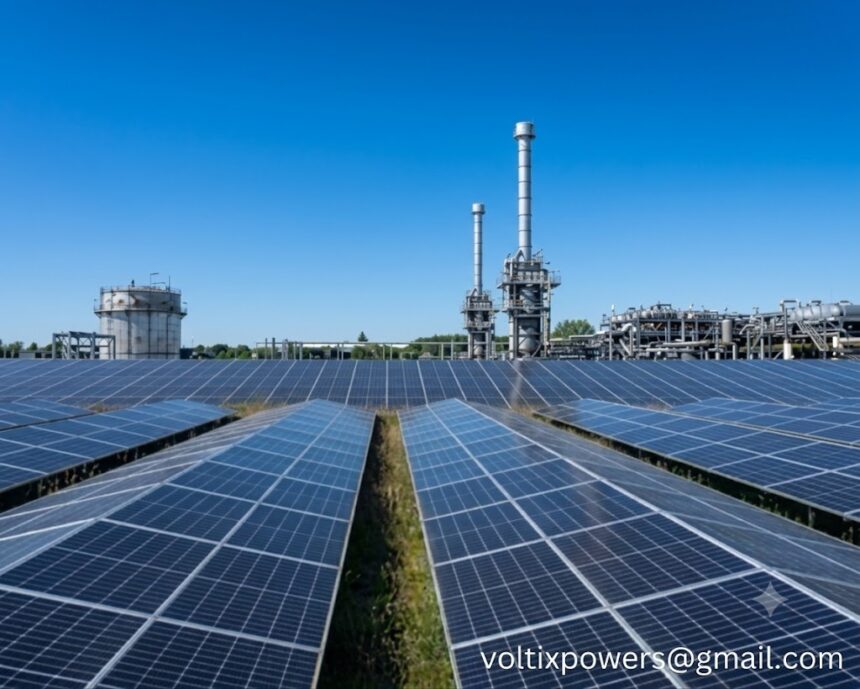
Industrial solar panels and roofing projects work best when handled together — businesses that combine both save significantly more in the long run. Roofclad Systems, one of the most trusted names among commercial solar installers, handles industrial and commercial installations on both metal clad and flat roofs, while also delivering broader roofing services. Their integrated approach means roofing and energy goals get solved together, keeping total project costs under control.
When to Consider Solar Panel Installation for Your Business
If your electricity costs keep increasing year on year and your energy bills are eating into profits, that is your clearest signal that installing industrial solar panels is the smart choice your business needs right now. Rising utility costs push businesses toward solar power, and the shift to a reliable and long-term solution starts making financial sense faster than most expect. Businesses chasing sustainability goals and ESG targets find that solar power fits naturally into their roadmap while visibly reducing their carbon footprint.
What Are Commercial Solar Panels and How Do They Work?
Commercial solar panels are large-scale solar power systems installed on the roofs or grounds of commercial and industrial buildings, using photovoltaic PV cells to convert raw sunlight into electricity. That electricity either powers the building directly or feeds back into the grid, cutting reliance on fossil fuels and lowering the carbon footprint of the business. The system runs silently with no moving parts, drawing from a truly renewable and clean energy source that delivers consistent output day after day.
Why Are Industrial Solar Panels Relevant for Businesses in Manchester?
Manchester may have a reputation as a rainy city, but there is far more sunshine here than most give it credit for, making commercial solar panels a serious opportunity for local businesses. The city has committed to cutting carbon emissions by 2038, and investing in renewable, clean energy is one of the most direct ways any business can contribute while protecting its bottom line. Lowering energy bills, building genuine savings on electricity, and pulling consumption away from the grid tightens energy costs and lifts profitability in ways that compound over time.
Case Study in Manchester and ROI
A completed project in Fallowfield, Manchester installed a Solar PV array on student accommodation using 165 Solar PV Panels at 72.60kW — with a return on investment expected in just 4 years. In the first year alone, the building projected savings of just under £15,000 on electricity bills, proving the model works powerfully for sites with high bills and a big roof space. On top of the financial gains, the project also delivered annual CO2 savings of 11,460kg, making the cost of energy both a business win and an environmental one.
Government Incentives and Regulatory Support
There are no active grants for Solar PV right now, but under the Smart Export Guarantee (SEG), any surplus renewable electricity fed back into the grid earns the business payment for every unit generated. The government also applies 0% VAT to Battery Storage systems, covering standalone battery installation, batteries added alongside Solar PV, and retrofitted batteries — making storage upgrades a financially smart move. Working with an MCS certified, reputable, and competent renewable energy installer guarantees quality installations built in full compliance with recognised industry standards.
Considerations for Commercial Solar Panel Installation
Before committing, businesses need to calculate how much power they need to generate and how much space is available, since power output — measured in watts (W) or kilowatts (kW) — depends on size, efficiency, orientation, and sunlight received. The average power consumption for a UK business sits around 15,000 kWh per year, pointing toward a 10 kW solar system, though a proper survey and specialist software always shape the final solution based on real energy usage patterns. Installation costs range from £4,000 to £100,000 depending on type, number of panels, location, and condition of the site, while maintenance stays low since solar panels have no moving parts.
Conclusion
Choosing industrial solar panels is one of the smartest and most sustainable choices a business in Manchester can make — delivering real energy savings, measurable environmental impact, and long-term property value all in one move. Solarus Energy Limited brings deep experience and genuine expertise to every solar PV solution across the north west, offering high-quality solar panel installation, maintenance, and bespoke energy solutions built around your budget. A free, no-obligation site survey assesses your energy needs, evaluates your roof or ground potential, and delivers a clear quote and design proposal — all within roughly one hour — so reaching out via their contact page is the simplest first step toward your solar ambitions
FAQs
1. Inverter for solar panel kitne KW ka lena chahiye?
Hamesha panels use 20-25% bara inverter lo. 3KW panels hain to 4KW inverter best hai. Chota inverter overload hoga aur bara inverter paise waste karega.
2. Load shedding mein konsa inverter for solar panel best hai?
Load shedding hai to Hybrid ya Off-grid inverter lo. On-grid inverter light jane par band ho jata hai. Hybrid din ko solar + raat ko battery dono chalata hai.
3. Inverter for solar panel mein MPPT kya hota hai?
MPPT ek technology hai jo solar se max bijli nikalti hai. Bina MPPT wala inverter 30% power waste kar deta hai. Hamesha MPPT wala inverter for solar panel lo.
4. Inverter ki warranty kitni honi chahiye?
Kam se kam 5 saal warranty lazmi hai. Inverex, Knox, Fronus Pakistan mein service bhi dete hain. 1-2 saal warranty wale inverter mat lo.
5. Kya inverter for solar panel bina battery chal sakta hai?
Haan, On-grid inverter bina battery chalta hai. Lekin light jate hi band ho jata hai. Backup chahiye to Hybrid inverter + battery lagao.