
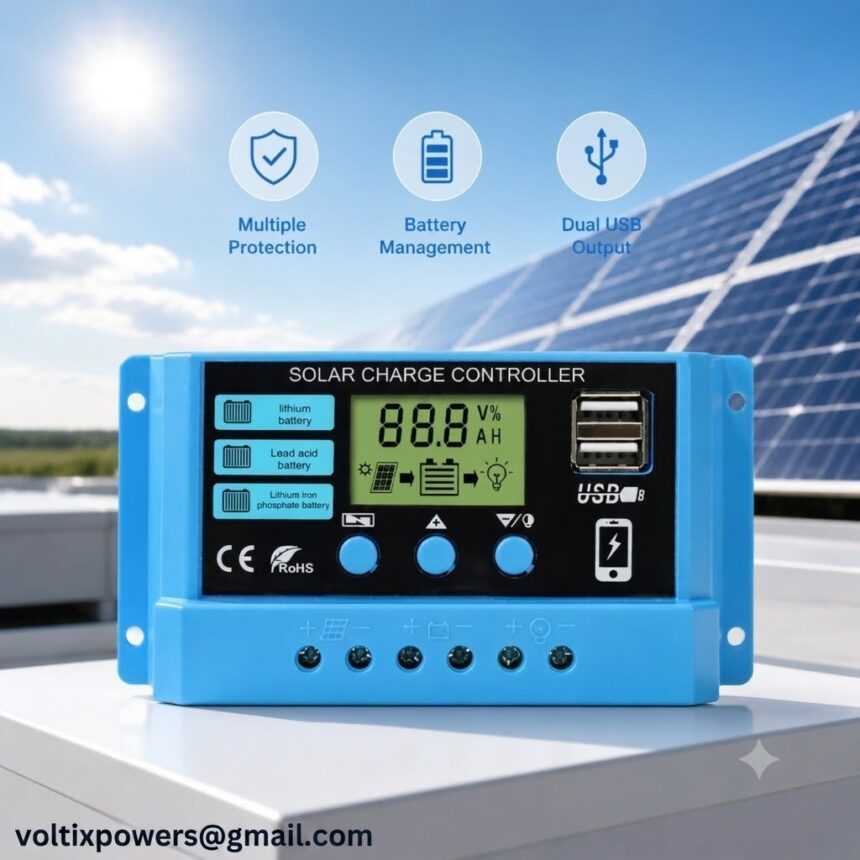
A solar panel charge controller is one of the most important parts of a solar power system because it controls the flow of electricity between solar panels and batteries. Many people focus only on buying high-quality solar panels and batteries, but they forget that a charge controller plays a major role in protecting the system and improving battery life.A solar setup without a proper charge controller can create problems such as battery overcharging, overheating, and reduced performance. The charge controller manages the voltage and current coming from solar panels and delivers safe power to the battery. Whether you have a small home solar system or a large off-grid setup, choosing the right controller is essential.
What Is a Solar Panel Charge Controller?
A solar panel charge controller is an electronic device that regulates the energy produced by solar panels before it reaches the battery. Solar panels produce different amounts of electricity depending on sunlight conditions, temperature, and panel performance.The main job of the controller is to make sure the battery receives the correct amount of power. It prevents the battery from charging too much and protects it from damage.A charge controller also helps maintain the battery’s health by controlling charging stages and preventing unnecessary power loss.
Why Is a Solar Panel Charge Controller Important?
A solar battery needs controlled charging. If solar energy directly connects to a battery without regulation, it can cause serious issues.A good controller provides several benefits:
Battery Protection
The biggest purpose of a charge controller is protecting batteries. It stops charging when the battery reaches full capacity. This prevents overheating and extends battery life.
Better Solar Efficiency
A quality controller helps use more energy from the solar panels. It reduces power losses and ensures that available sunlight is converted into useful electricity.
Longer Battery Life
Batteries are expensive parts of solar systems. Proper charging helps batteries last longer and reduces replacement costs.
System Safety
Charge controllers include safety features such as overload protection, short-circuit protection, and temperature control.
Types of Solar Panel Charge Controllers
There are mainly two common types of solar charge controllers:
PWM Charge Controller
PWM (Pulse Width Modulation) is the basic type of charge controller. It connects the solar panel voltage with the battery voltage and controls charging by reducing current flow.
Advantages:
1. Affordable price
2. Simple design
3. Good for small solar systems
Disadvantages:
1. Lower efficiency
2. Not suitable for large solar setups
PWM controllers are usually used for small home systems, lights, and basic backup solutions.
MPPT Charge Controller
MPPT (Maximum Power Point Tracking) is a more advanced technology. It adjusts the voltage and current from solar panels to collect maximum available power.
A solar panel charge controller with MPPT technology can improve efficiency, especially in larger systems.
Advantages:
1. Higher efficiency
2. Better performance in changing weather
3. Works well with high-voltage solar panels
4. Suitable for bigger systems
Although MPPT controllers cost more, they usually provide better results and energy savings.
How Does a Solar Charge Controller Work?
The working process is simple:
1. Solar panels produce electricity from sunlight.
2. The charge controller receives this energy.
3. It checks battery voltage and charging level.
4. It sends the correct amount of power to the battery.
5. When the battery is full, it reduces or stops charging.
Modern controllers automatically adjust charging according to battery condition.
Common Problems With Charge Controllers
Sometimes users experience issues because of incorrect setup.
Common problems include:
Controller Not Charging Battery
Possible reasons:
1. Loose wiring
2. Low sunlight
3. Incorrect settings
4. Damaged solar panel
Battery Overcharging
This can happen if the controller is not working correctly or is not suitable for the battery.
Low Power Output
A poor-quality controller may waste energy and reduce system performance.
Conclusion
A solar panel charge controller is a key component that protects batteries, improves energy efficiency, and keeps a solar system working safely. Without the right controller, your solar panels may not perform at their best and your batteries may lose their lifespan quickly.Choosing between PWM and MPPT depends on your system size and energy requirements. For larger and more efficient solar setups, MPPT technology is often the better option. A quality charge controller ensures that your solar investment delivers reliable power for years.
FAQs
1. Do I need a charge controller for solar panels?
Yes, if your solar system charges batteries, a charge controller is necessary to prevent overcharging and protect the battery.
2. Which is better: PWM or MPPT charge controller?
MPPT controllers are generally better because they provide higher efficiency, especially in larger solar systems.
3. Can a solar panel charge battery without a controller?
It is possible, but not recommended. Direct charging can damage the battery and reduce its lifespan.
4. How long does a solar charge controller last?
A good-quality controller can last many years if installed and maintained properly.
5. What size charge controller do I need?
The size depends on your solar panel wattage, voltage, and battery system. Always choose a controller that can handle your system capacity.
6. Does a charge controller increase solar power?
It does not create extra power, but MPPT controllers help extract more available energy from solar panels.
7. Can I use a charge controller with lithium batteries?
Yes, but the controller must support lithium battery charging settings.